
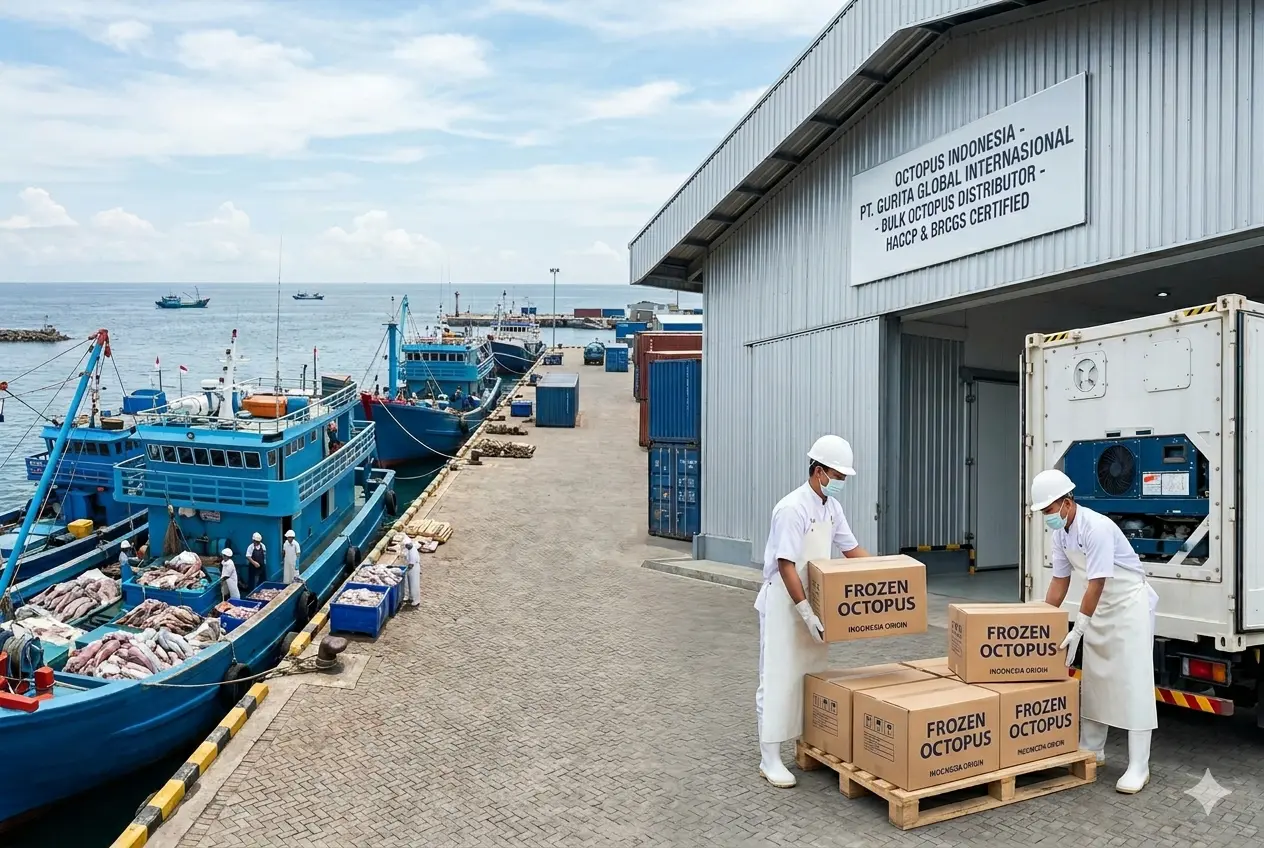
How to Find a Reliable Bulk Octopus Distributor in Indonesia: A Complete Guide for Global Buyers
The global seafood market has witnessed a dramatic surge in demand for cephalopods, with octopus leading the charge as a premium delicacy in Mediterranean, East Asian, and North American cuisines. However, for wholesalers and food service chains, the challenge isn't just finding a supplier—it’s finding a Bulk Octopus Distributor that can guarantee consistency, safety, and ethical sourcing.
Indonesia, the world’s largest archipelagic nation, has emerged as the premier destination for high-quality octopus. But with thousands of islands and a fragmented supply chain, how do you navigate the landscape to find a partner who won't let you down? This guide provides a deep dive into the Indonesian octopus industry and a step-by-step framework for securing a reliable supply.
Why Source from Indonesia? The Powerhouse of the Indo-Pacific
Before diving into the "how," it is crucial to understand "why" Indonesia is the strategic choice for your procurement needs.
1. Unmatched Biodiversity
Indonesia’s waters are home to some of the most sought-after species in the culinary world. The primary species available through a Bulk Octopus Distributor in Indonesia include:
- Octopus Cyanea (Big Blue Octopus): Known for its thick, meaty texture and impressive size, making it ideal for the "Pulpo Gallego" style dishes in Europe.
- Octopus Membranaceus (Webfoot Octopus): Often sold as "baby octopus," these are perfect for Asian stir-frys and takoyaki.
2. Year-Round Supply Chain
Unlike colder regions where fishing seasons are strictly limited by ice or extreme weather, Indonesia’s tropical climate allows for year-round harvesting. While there are peak seasons (typically between September and April), a well-established distributor will have the cold storage capacity to provide a steady flow of goods even during the low season.
3. Competitive Pricing and Scale
Indonesia offers a significant cost advantage due to integrated labor markets and proximity to rich fishing grounds. By dealing directly with a localized Bulk Octopus Distributor, you bypass multiple middlemen, ensuring that your margins remain healthy without compromising on the quality of the raw material.
Defining a "Reliable" Bulk Octopus Distributor: The Benchmarks
In the seafood industry, "reliable" is not a subjective term. It is defined by measurable standards. When vetting a potential partner, you must evaluate them against these four pillars:
I. Cold Chain Integrity
The journey of an octopus from the Indonesian sea to a plate in Madrid or New York is long. A reliable distributor must demonstrate a seamless cold chain.
- Blast Freezing: Does the facility use Air Blast Freezers (ABF) or Contact Plate Freezers? For bulk orders, IQF (Individually Quick Frozen) is often preferred to prevent clumping and preserve texture.
- Temperature Monitoring: You should demand logs showing that the product has been maintained at $-18^\circ\text{C}$ or lower throughout its storage.
II. Consistency in Grading
One of the biggest pain points for buyers is "size migration"—receiving a container where 20% of the octopus is smaller than the agreed-upon grade. A top-tier Bulk Octopus Distributor utilizes precise weighing technology and strict QC (Quality Control) staff to ensure that a 1-2kg grade is exactly that.
III. Processing Transparency
Reliable distributors are "open books." They should be able to tell you exactly where the octopus was caught (FAO Area 71), which landing site it came from, and how many hours passed between catch and freezing.
Key Certifications: The Non-Negotiables for Global Trade
If a distributor cannot provide the following certifications, they are not ready for high-volume international trade.
1. HACCP (Hazard Analysis and Critical Control Points)
This is the foundation of food safety. In Indonesia, this is often issued as a Sertifikat Penerapan Program Manajemen Mutu (PMM). It ensures that biological, chemical, and physical hazards are controlled during processing.
2. BRCGS and IFS
For those supplying large supermarket chains in the UK or EU, BRC (British Retail Consortium) or IFS (International Featured Standards) certifications are often mandatory. These indicate a "Gold Standard" in food safety management.
3. MSC (Marine Stewardship Council)
Sustainability is no longer a niche; it’s a market requirement. A Bulk Octopus Distributor committed to the long term will participate in Fishery Improvement Projects (FIPs) or hold MSC certification to ensure the species is not overfished.
Step-by-Step Guide: How to Find and Vet Your Distributor
Step 1: Digital Due Diligence
Start by utilizing B2B platforms like Alibaba, Global Sources, or LinkedIn. However, do not take their profiles at face value.
- Pro Tip: Look for companies that have been "Verified" by third-party inspectors. Cross-reference their names with the official list of exporters from the Indonesian Ministry of Marine Affairs and Fisheries (KKP).
Step 2: Requesting Samples and Lab Reports
A legitimate Bulk Octopus Distributor will have no problem sending samples (though you should expect to pay for the freight).
- What to check: Once thawed, the octopus should have a fresh sea scent, no slime, and a firm texture.
- Lab Tests: Request recent microbiology reports covering Salmonella, Vibrio cholerae, and heavy metals like Mercury and Lead.
Step 3: The Site Visit (Virtual or Physical)
If you are moving hundreds of tons, a flight to Indonesia is a small investment. Visit the processing plants in areas like Surabaya, Makassar, or Bitung.
- Look for: General hygiene, worker safety equipment, and the state of the freezing equipment. If a physical visit isn't possible, request a live video tour via Zoom or WhatsApp.
Navigating Logistics: Moving Bulk Orders from Indonesia
Understanding the "Incoterms" is vital for calculating your landed cost. Most Indonesian exporters prefer FOB (Free on Board), meaning they handle everything until the container is on the ship.
Major Export Gateways:
- Tanjung Perak (Surabaya): The hub for Eastern Indonesia’s seafood.
- Tanjung Priok (Jakarta): Primary gateway for international shipping lines.
- Makassar (South Sulawesi): Closer to the richest octopus fishing grounds.
Documentation Checklist:
Ensure your Bulk Octopus Distributor provides:
- Health Certificate (HC): Issued by the Indonesian Fish Quarantine and Inspection Agency (BKIPM).
- Certificate of Origin (COO): Crucial for claiming preferential tariff rates in certain countries.
- Bill of Lading (B/L).
- Packing List & Commercial Invoice.
Red Flags: When to Walk Away
In your search for a Bulk Octopus Distributor, be wary of:
- Prices that are 20% below market: This usually means the octopus is "over-soaked" with additives to increase weight or is being sourced from illegal, unreported, and unregulated (IUU) fishing.
- Lack of a Company Email: Professional exporters do not use generic @gmail.com accounts for multi-million dollar contracts.
- Evasive answers about sourcing: If they can't tell you the region of harvest, they don't control their supply chain.
Conclusion: Securing Your Supply Chain
Finding a Bulk Octopus Distributor in Indonesia is an exercise in patience and verification. By focusing on cold chain integrity, international certifications, and transparent sourcing, you can build a partnership that lasts decades.
Indonesia offers the volume and the quality; your job is to filter the noise and find the professionals. With the right partner, you aren't just buying seafood—anda sedang membangun fondasi bisnis yang berkelanjutan dan menguntungkan.