
Understanding Cephalopod Freezing Technologies
When procurement managers and factory plant engineers source wholesale frozen octopus from international suppliers, one of the most critical commercial decisions lies in selecting the freezing method: Individually Quick Frozen (IQF) or Block Frozen (Contact Plate Freezing). Both methods serve distinct operational requirements across processing plants, food service distributors, and industrial seafood canneries.
What is Individually Quick Frozen (IQF) Octopus?
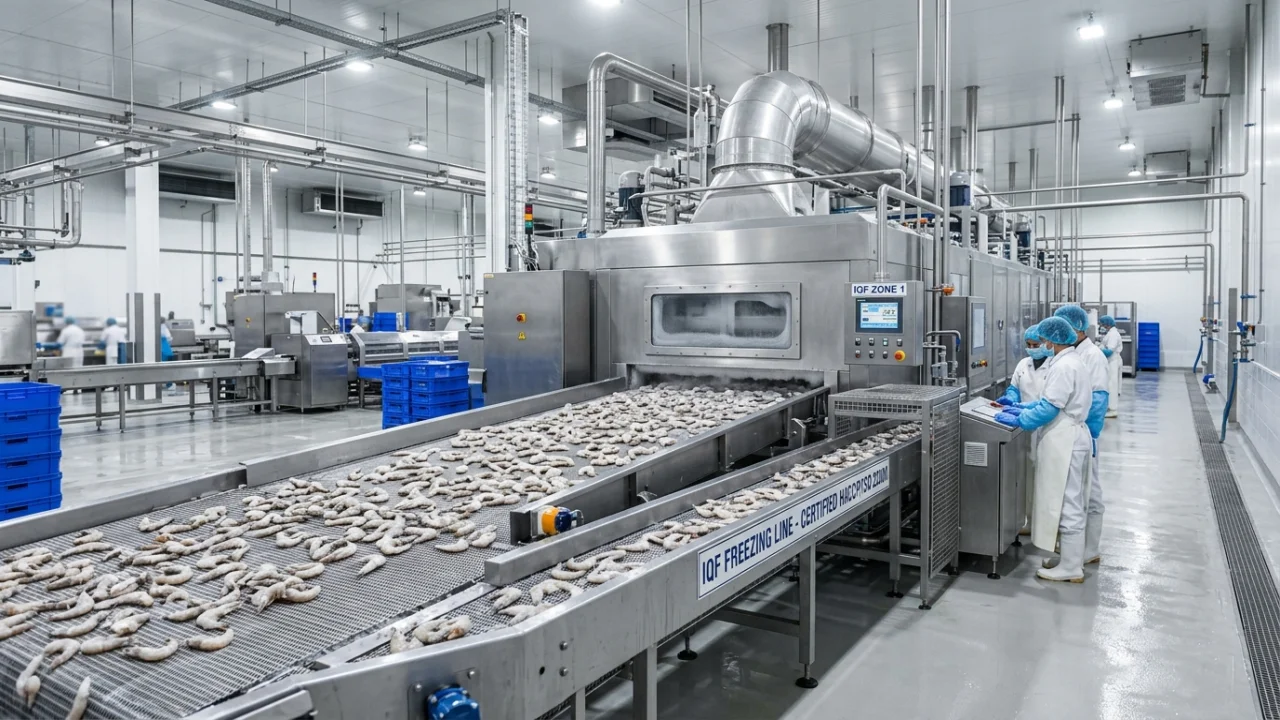
In the IQF process, whole cleaned octopuses or pre-cut pieces travel along a stainless steel continuous tunnel freezer or spiral cryogenic freezing line. Sub-zero airflow (-35°C to -40°C) rapidly envelops each individual specimen. Because freezing occurs in minutes rather than hours, ice crystals formed inside the muscle fibers remain microscopic. This preserves the intracellular membrane, completely preventing the cellular breakdown that causes mushy texture and heavy water loss during defrosting.
Key Advantages of IQF Octopus:
- Portion Control Flexibility: Kitchens and secondary processors can thaw the exact quantity needed piece by piece without defrosting an entire 10kg block.
- Minimal Drip Loss: Superior cellular integrity ensures high cooking yields and maintains natural springy elasticity.
- Visual Presentation: Preserves authentic natural colors, skin pigmentation, and intact suckers without mechanical crushing.
What is Block Frozen Octopus?
In block freezing, fresh whole cleaned or whole round octopus is weighed into metal freezing pans (typically 10 kg, 15 kg, or 20 kg configurations) with a measured volume of purified water, then compressed between hydraulic refrigerated contact plates at -30°C. Once frozen solid, the blocks are demolded, glazed with a protective ice shield, and packed into master cartons.
Key Advantages of Block Frozen Octopus:
- Maximum Storage Density: Solid rectangular blocks eliminate void space, allowing maximum metric ton payload per 40ft reefer container.
- Protection Against Freezer Burn: The surrounding ice matrix creates a barrier that prevents oxygen contact and sublimation during long storage periods.
- Lower Processing Cost: Typically commands a more economical FOB price per metric ton, making it the preferred choice for industrial canning facilities and large-scale boil-and-pack plants.
Comprehensive Technical Comparison Table
| Feature / Metric | IQF Octopus (Tunnel/Spiral) | Block Frozen (Contact Plate) |
|---|---|---|
| Thawing Speed | Rapid (15–30 minutes in cold water) | Slow (Requires 8–16 hours controlled thawing) |
| Drip Loss / Cooking Yield | Low drip loss (< 3%), high yield | Moderate drip loss (4–7% depending on thaw curve) |
| Container Payload | ~18–22 MT per 40ft FCL | ~24–27 MT per 40ft FCL (Maximum density) |
| Best Application | HORECA, Supermarkets, Takoyaki Cuts | Industrial Canning, Mass Boiled Processors |
| Cost per Metric Ton | Premium Grade FOB | Economical Mass Bulk FOB |
Glaze Standards & Net Weight Integrity at PT GGI
A frequent dispute in international seafood trade involves misleading ice glaze percentages. At PT Gurita Global Internasional, transparency is paramount. We pack strictly to buyer specifications—whether 100% Net Weight (0% glaze for raw processing), 5% glaze, or 10% protective glaze—with certified tare weight calibration guaranteed on every bill of lading.
Consult with Our Seafood Processing Specialists
Not sure whether IQF or Block Frozen best matches your plant machinery and target margins? Contact our technical processing division for custom sample orders and technical datasheets.
Explore Our Product Range Request Specification Sheet